
"flavor development"
20000 article(s) found
Flavor Development of Puerto Rico Coffee producing area
Following Cafe comment (Wechat official account vdailycom) found that Beautiful Cafe opened its own shop in Puerto Rico Coffee Origin Puerto Rico this small South American country is made of a series of scattered islands with luxuriant flowers and flowers like spring all year round, like beads cast by God, the brilliance of heaven can be seen with a touch of rotation. Puerto Rico Yaoke special coffee in the west of the island

A brief introduction to the history and culture of the origin and development of traditional raw bean treatment methods 90 + W2, H2, N2
90 + based on the original excellent raw beans, continue to be graded as follows: Level 7: single production area harvest. Rare varieties with fine taste and special flavor are selected by hand and then treated by NinetyPlus to reach the standard of more than 90 +; Level 12: harvested in a single production area. Negative forms such as must be recognized and indelible are used on the website.
Background of coffee development in Dominica introduces the processing and flavor of coffee in Dominica
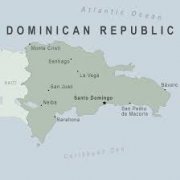
Coffee from the Dominican Republic (Dominican Republic) appeared in 1822-1844, and the earliest coffee garden was probably located in the BahorucoPanzo hills near Neyba. There are several coffee producing areas in the Valdesia region of Dominica and by 1880 it had become a major coffee manufacturing center in the country. In 1956, Dominica began to export coffee from specific producing areas, mainly Bani and Ocoa.
Bolivian coffee flavor describes what is "tomorrow Sun Project" and Bolivian COE
Bolivian coffee beans are concentrated in rural areas of Yungas, with about 95 per cent of production. Other developing regions include Santa Cruz, Beni, Cochabamba, Tariha and Pando. Despite the existence of commercial farms and estates, the Government's land reform has expropriated most of the large land and redistributed it to rural families. These small plots of land cover an area of 1-8 hectares and produce

Fragrant and Special Coffee Manor Coffee Manor in Rwanda Origin and Development of Fine Coffee History and Culture
The aroma of soil [Earthy]: commonly used to describe spicy and earthy Indonesian coffee, not the smell of dirt on coffee beans. Uniqueness [Exotic]: describes coffee with its unique aroma and special flavor, such as flowers, fruits, and spices. Coffee from East Africa and Indonesia usually has this property. Aromatic alcohol [Mellow]:

History of the Origin and Development of Brazilian Coffee beans Flavor and taste characteristics of Brazilian Arabica coffee beans
Professional coffee knowledge exchange more coffee bean information please follow the coffee workshop (Wechat official account cafe_style)

Integrate the coffee industry; the Christmas atmosphere of Coffee Street on University Road is getting stronger and the old street is drifting with western flavor.
Explore cultural resources and hold coffee season events: at 7: 00 p.m. on May 27, 2016, with the singing of the old song "swing together", the first fashionable Nanwei Old Street University Road Coffee Culture season in Qingdao opened grandly in the trestle Plaza. At the scene of the opening ceremony, the local music team of Qingdao was happy to bring a wonderful time to meet the coffee theme concert. As a century-old street and university in Qingdao
A brief introduction to the Origin and Development of Fine Coffee beans in Kahayang Gan Manor with strong Flavor
Another important feature of Indonesian local cafes that cannot be ignored is that coffee shop owners are proud to recommend local coffee. Even big brands like Starbucks in Indonesia still offer high-quality coffee from Sumatra locally to meet the needs of customers. This is another factor that Indonesians take into account the local quality of coffee. The owner of the cafe is concerned about this question.

Development History of Rwanda Coffee Industry Starbucks Rwanda Shuli Coffee beans characteristic Flavor
Professional coffee knowledge exchange more coffee bean information please follow the coffee workshop (Wechat official account cafe_style) the world's top 10 coffee producing countries, mostly concentrated in South America, Southeast Asia and Africa, especially Africa as the hometown of coffee, has been hoping to expand the international market, in which the small Central African country of Rwanda, due to its small land, planting area can not win by quantity, 15 years

Market Survey Report on Coffee Spreading and Development in China
Coffee in China's spread and development of market research report, whether freshly ground coffee beans, or just brewed hot coffee, are emitting a rich aroma, intoxicating. There are many ways to savor this indulgence: espresso, cappuccino, latte, flavored coffee, which are frequented by Beijing, Shanghai and other big cities in China

A brief introduction to the planting and Development of Katim Coffee Bean Flavor description area
Following Cafe (Wechat official account vdailycom) found that Beautiful Cafe opened a small shop of its own, Catimor: in 1959, the Portuguese mixed Brazilian Kaddura with Timo to produce a disease-resistant Katim / Katimo, which is now an important variety of commercial beans. Katim is a variety introduced later, with a relatively stable yield and strong resistance to diseases and insect pests.

A brief introduction to the History and Culture of the Origin and Development of Matarimoka Fine Coffee beans
The coffee beans produced in Yemen belong to Arabica. Generally speaking, mocha beans are smaller than ordinary coffee beans and look very different from other coffee beans with large particles. However, although this kind of coffee bean is small, it contains distinct features, especially the distinct fruit acid often plays a role in flavor enhancement in mixed coffee. No wonder it is compared to the red in coffee.
Half-sun Brazilian Fine Coffee Manor Queen Manor Yellow bourbon Coffee Origin, Development, History and Culture
There are many large farms in Brazil, which run endless coffee plantations. They use machines to harvest and dry them. They are so efficient in automation that they regard coffee as a general agricultural material and completely abandon the flavor and flavor. As a result, many select coffee companies simply do not sell Brazilian beans so as not to demean themselves. In select coffee shops, Santos in Brazil still appears occasionally.

Jamaica Blue Mountain Coffee Flavor Producing Area Growing Environment Fine Coffee Bean Introduction
Jamaica pursues an independent and non-aligned foreign policy, advocates sovereign equality of States, non-interference in internal affairs, promotion of international cooperation, settlement of international disputes within the framework of the United Nations and opposition to the use of force. Safeguarding national sovereignty, attracting foreign investment and tourists, and exploring international markets are the main objectives of its diplomatic work. Active development of solidarity and cooperation with Caribbean countries, active participation

The Development of Musk Coffee
The editor of the development process first introduced Kopi Luwak coffee to the United States (M.P. Mountanos) pointed out that at first, when he heard about this kind of internal fermented coffee, he thought it was a joke in the industry, but he did not take it seriously. later, when he saw a special report on Kopi Luwak in National Geographic, he became interested in her. it took seven years to find a stable source of supply, and it began to be less.

The Development of Ethiopian Coffee beans in the course of Coffee Harald Coffee
Harar Harald, a name that reflects the rise and fall of Ethiopia. The Montenegro region of Harald is by far the only place in the world with wild coffee, which is auctioned in London every year. The secret of producing high-quality coffee is that coffee farmers have developed a coffee culture in a suitable environment through repeated learning of the coffee planting process for several generations.
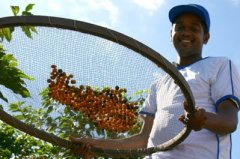
Analysis on the Market Development status of Flavor characteristics of Brazilian Fine Coffee beans, the largest Coffee producer in the World
For the exchange of professional baristas, please pay attention to the coffee workshop (Wechat official account cafe_style) Coffee industry is undoubtedly one of the most important economic industries in Brazil. Brazil is also one of the most important coffee producers in the world. In recent years, it also has a place in the boutique coffee market, producing in Paran, Espirito Santos, So Paulo, Minas Gerais, and Bahia and other regions.

The Development trend of Fine Coffee beans and Fine Coffee
Boutique coffee beans 1. High-quality coffee beans must be excellent varieties, such as the original bourbon species, mocha species and Tippica species. The coffee beans produced by these trees have strange aroma and flavor, which is far from that of other tree species, but the relative yield is low. in recent years, in pursuit of disease and insect resistance and yield improvement, there are many improved tree species, such as Kenya to promote high yield.

Citrus sour, Burundian coffee flavor, introduction to boutique coffee beans in manor planting environment
We should attach importance to good-neighborliness and friendship, emphasize the important role of neighboring countries in peace in Burundi, and actively restore and develop relations with neighboring countries. On January 22, 1999, relations with neighboring countries continued to improve after the 7th summit of state organizations in the Great Lakes region on Burundi decided to suspend economic sanctions against Burundi. In April 2006, a tripartite meeting of the Great Lakes region was held in Bujumbura, Burundi, Rwanda and Congo (
A brief introduction to the Origin and Development of Fine Coffee beans in Paradise Bird Manor
The frost in 1975 destroyed most coffee crops in Brazil, but stimulated the development of coffee in Papua New Guinea. The Government has implemented a scheme to finance the creation of about 20 hectares of coffee plantations in rural or collective land ownership. This measure has indeed increased the penetration of coffee in the local economy, with annual production reaching 1 million bags by 1990. However, almost